



 Veterinary care
 Ways to get care
 Visit information
 Pet wellness plans
 Virtual petcare
 Pet Chat™ information
 Locations
 MyBanfield
 Shop packages now
 Request information
 Package FAQs
 NEW! Banfield Access Plan
 Pet health articles
 Puppy care
 Kitten care
 Senior care
 Dental care
 Diet and nutrition
 Ear care
 Parasites
 Fleas
Fleas Ticks
Ticks Mites and mange
 Worms
Worms Skin and coat care
 Mobility
 First aid
 Vaccinations
 End of life care
 Podcast - Not Just Fluff
 Traveling with your pet
 Video vault
 About us
 Contact us
 Newsroom
 Our leadership
 Shop
Shop
 Locations/appointments


dog ear infection symptoms, causes, and types
A dog ear infection commonly causes head shaking, scratching or pawing at the ears, redness, swelling, discharge, and unusual odor. The discharge may be brown, yellow, waxy, or moist, and the ear may smell foul, sweet, or yeasty.
Most dog ear infections involve an overgrowth of bacteria, yeast, or both. That overgrowth is often triggered by an underlying problem such as allergies, trapped moisture, ear anatomy, or a foreign object.
A veterinarian can determine what is causing the infection with an ear exam and ear cytology, which examines a sample from the ear under a microscope. Identifying the cause matters because yeast, bacteria, mites, and other ear problems can look similar but need different treatment.
If your dog has signs of an ear infection, an exam can help identify the problem before it becomes more painful or difficult to treat.
Signs and symptoms of a dog ear infection
Dog ear infection symptoms can range from mild irritation to significant pain. Common signs include:
- head shaking — especially frequent or persistent shaking
- scratching or pawing at the ears
- redness or swelling inside the ear
- brown, yellow, or dark discharge
- unusual odor — including a foul, musty, sweet, or yeasty smell
- pain or sensitivity when the ear or area around it is touched
- head tilt or changes in balance
- hair loss, scabs, or irritated skin around the ear from repeated scratching
What a dog ear infection looks and smells like can vary depending on the cause and which part of the ear is infected. Yeast may produce a greasy brown discharge and a distinctive musty or sweet smell, while bacterial infections can cause thicker yellow or brown discharge and a stronger, unpleasant odor. Smell and appearance can provide clues but can’t diagnose if it’s a bacterial or yeast infection — or both!
Inner ear infection symptoms may also involve more balance and coordination issues such as a head tilt, stumbling, walking in circles, nausea or vomiting, and reduced hearing or deafness.
Some dogs also don't like their ears touched when an infection is painful. If your dog pulls away, yelps, or seems uncomfortable when you go near their ears, that is a good reason to have them see a vet.

What causes dog ear infections?
Most dog ear infections happen when bacteria or yeast that normally live in or around the ear multiply. This overgrowth is usually secondary to an underlying problem, rather than the primary problem itself.
Common causes and contributing factors include:
- allergies — including environmental allergies and food-related allergies
- trapped moisture after swimming, bathing, or exposure to humid conditions
- ear anatomy — floppy ears, hairy ear canals, or narrow canals can reduce airflow
- foreign material — such as grass seeds or other debris entering the ear
- polyp or tumor
- ear mites or other parasites
- hormonal or immune-related conditions that make infections more likely
The ear canal is also naturally shaped like an L, which makes it easy for moisture and debris to become trapped deeper inside.
If a dog keeps getting ear infections, there is often an underlying cause that has not been identified or fully managed. Treating the infection may clear the immediate problem, but finding and managing what is triggering it can help prevent the cycle from repeating.
Types of dog ear infections
Dog ear infections can involve different organisms and different parts of the ear.

Yeast ear infections
Yeast normally lives on dogs' skin, but when conditions in the ear lead to overgrowth, it can cause inflammation, itching, redness, and brown or greasy discharge. Yeast infections often have a characteristic musty, sweet, or yeasty smell.

Bacterial ear infections
Bacteria can multiply in an inflamed or damaged ear and cause an infection. Bacterial infections may produce yellow, brown, or cream-colored discharge and can be particularly painful.
Some bacterial infections are more difficult to treat than others, which is one reason identifying the specific cause is important.

Mixed ear infections
A dog can have both yeast and bacteria in the same ear. This is called a mixed infection and may require treatment directed at both organisms.
Because yeast and bacteria can look similar when you look into the ear, a veterinarian will use cytology to determine which organisms are present.
Veterinarians also classify ear infections based on where they occur:
- Otitis externa affects the outer ear canal and is the most common type of ear infection in dogs.
- Otitis media affects the middle ear and can develop when an infection extends deeper.
- Otitis interna affects the inner ear and can interfere with balance and coordination.
Deeper ear infections can be more serious. A head tilt, stumbling, loss of balance, or other changes in coordination should be evaluated by a vet.
Is it ear mites or an ear infection?
Ear mites can cause some of the same signs as an ear infection, including itching, head shaking, redness, and discharge. And if your pup has ear mites, that could lead to a bacterial or yeast ear infection.
As a general clue, ear mites often produce dry, dark, crumbly debris that looks like coffee grounds, while yeast or bacterial infections are more likely to cause moist brown or yellow discharge and an odor.
A veterinarian will examine a swab from the ear under a microscope to determine whether mites, yeast, bacteria, or another problem is responsible.
Learn more about dog ear mites
Which dogs are most at risk for ear infections?
Some dogs are more likely to develop ear infections because of their anatomy, allergies, environment, or other health factors.
Higher-risk dogs include:
- Dogs with floppy ears, including poodles, cocker spaniels, and basset hounds
- Dogs with allergies
- Dogs that swim frequently or spend a lot of time in water
- Dogs with narrow or hairy ear canals
- Dogs living in humid environments
- Dogs with recurring skin or ear problems
Having one of these risk factors does not mean a dog will develop an ear infection. It simply means regular ear checks and appropriate preventive care may be especially helpful.
When to see your Banfield veterinary team
A suspected ear infection is a good reason to schedule a veterinary exam, particularly when symptoms persist or are getting worse.

See a veterinarian promptly if your dog has:
- ear pain or yelping when the ear is touched
- significant redness or swelling
- brown, yellow, or heavy discharge
- strong or foul odor
- constant head shaking or scratching
- skin that has been scratched raw
- head tilt or loss of balance
- repeated ear infections
Dog ear infections do not usually resolve by waiting them out. The infection may temporarily seem better while the underlying problem remains, allowing it to return or become more difficult to treat.
Read more about if you can treat a dog ear infection without a vet
How veterinarians diagnose an ear infection
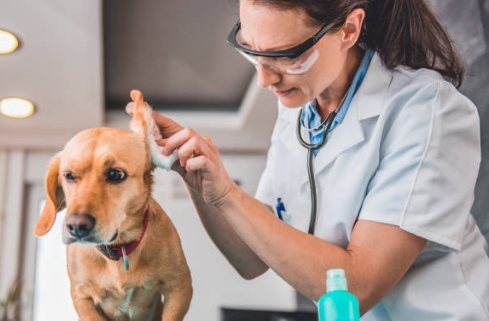
A veterinarian will usually start by examining the ear with an otoscope. This allows them to look down the ear canal, assess inflammation, look for foreign material, and check the eardrum.
Your veterinarian may also collect a sample of ear debris for cytology. The sample is examined under a microscope for yeast, bacteria, or other organisms.
This step matters because the right treatment depends on what is causing the infection. Once the vet knows the cause and location of the infection, they will prescribe the right medication and address any underlying condition contributing to the problem.
Dog ear infection FAQs
What does a dog ear infection look like inside the ear?
An infected ear may look red, swollen, irritated, or moist, with brown, yellow, or dark discharge. You may also notice waxy or greasy buildup and an unusual odor. Because different ear problems can look similar, an appearance alone can’t diagnose an infection or identify its cause.
What does dog ear infection discharge smell like?
The smell varies depending on what is causing the problem. Yeast can produce a musty, sweet, or corn chip smell, while bacterial infections may have a stronger, foul odor. Smell can be a useful clue, but your veterinarian needs to examine the ear and will perform cytology to determine the cause.
Can a dog ear infection clear up on its own?
A dog ear infection should not be expected to clear up on its own. Even if symptoms temporarily improve, the underlying cause may still be present and the infection can return or become more difficult to treat. If your dog has pain, discharge, odor, redness, or persistent scratching or head shaking, schedule a vet exam.
Why does my dog keep getting ear infections in the same ear?
Recurring infections often point to an underlying problem such as allergies, trapped moisture, ear anatomy, a mass or polyp, or a foreign object. Treating only the infection without addressing the underlying cause can allow it to come back. Your veterinarian can help identify what is driving the repeated infections.
Are dog ear infections contagious to other pets?
Most bacterial and yeast ear infections in dogs are not considered contagious between pets. However, some conditions that cause similar symptoms, such as ear mites, can spread between animals. Because several ear problems look alike, a veterinary exam can determine whether your dog's condition could affect other pets.
What is the difference between a yeast and bacterial ear infection in dogs?
Both can cause itching, redness, discharge, odor, and head shaking, so you cannot reliably tell them apart just by looking at the ear. Yeast infections often cause greasy brown discharge and a musty or sweet smell, while bacterial infections may produce yellow or brown discharge and a stronger odor. Cytology helps your veterinarian identify which organisms are present.
Can a dog ear infection cause hearing loss?
Yes. Severe or untreated ear infections can affect hearing, particularly when inflammation or infection extends deeper into the ear. Hearing changes may be temporary or, in more serious cases, long-lasting, which is why persistent infections should be evaluated and treated.
Worried about your dog's ears?
If you're seeing head shaking, scratching, redness, discharge, or an unusual smell, it's time to get your dog’s ears checked.
Optimum Wellness Plans® can make ear care more affordable. All plans include ear diagnostics and unlimited office visits.

Medically reviewed by Diana Luplow, DVM
Important Notice: The information provided on this page is for informational purposes only and is not a substitute for professional veterinary advice. Always consult a veterinarian with any questions regarding your pet's health or medical condition. Never disregard or delay seeking professional veterinary advice based on information from this page.


 Pet Chat™


 Appointment details


 Pittsburgh Village East
 847-816-4667


 Notes for the vet

 This is a note for users pertaining to specific appointment types, requests, requirements, or other items.