



 Veterinary care
 Ways to get care
 Visit information
 Pet wellness plans
 Virtual petcare
 Pet Chat™ information
 Locations
 MyBanfield
 Shop packages now
 Request information
 Package FAQs
 NEW! Banfield Access Plan
 Pet health articles
 Puppy care
 Kitten care
 Senior care
 Dental care
 Diet and nutrition
 Ear care
 Parasites
 Fleas
Fleas Ticks
Ticks Mites and mange
 Worms
Worms Skin and coat care
 Mobility
 First aid
 Vaccinations
 End of life care
 Podcast - Not Just Fluff
 Traveling with your pet
 Video vault
 About us
 Contact us
 Newsroom
 Our leadership
 Shop
Shop
 Locations/appointments




puppy dental care: how to protect your pup’s teeth from the start
Healthy teeth start with healthy habits, and it’s never too early to begin! Puppies explore the world with their mouths, which makes early dental care an important part of helping them grow strong and confident.
Learning how to care for your puppy’s teeth doesn’t have to be complicated or stressful. It’s about starting small, keeping it positive, and building consistency over time. Even short, gentle brushing sessions make a difference.
In this guide, you’ll learn everything you need to know about your puppy’s dental journey — from teething timelines and brushing how-tos to choosing safe chew toys and knowing when it’s time to call the vet.
If you ever have questions about your furry friend’s breath, gums, or teeth, your Banfield veterinary team is here to help. Make an appointment at your local Banfield

When do puppies start teething?
Puppy teething starts sooner than most owners expect — usually around 3 to 4 weeks of age, when those tiny baby teeth begin to poke through. You’ll really notice the change around 12 to 16 weeks, as your pup starts exploring everything with their mouth. By 6 months, most puppies have their full set of adult teeth (up to 42 in total!).
During this time, chewing is your puppy’s way of soothing sore gums and helping loose baby teeth fall out. You might notice a few small spots of blood on toys or teething rings, which is completely normal. Other signs of teething include:
- Extra chewing or mouthing
- Drooling more than usual
- Mild gum swelling or sensitivity
- Fussiness when eating or playing
Just like toddlers, every puppy’s timeline is a little different. Some sail through teething with barely a fuss, while others need extra comfort and chew options to stay content.
How to start brushing your puppy’s teeth
Brushing your puppy’s teeth might sound tricky at first, but it’s one of the best things you can do for their long-term health. And it gets much easier with practice! The goal isn’t perfection; it’s helping your puppy get comfortable with the process so brushing becomes part of your normal routine.
Here’s a gentle, step-by-step way to start:
- Get them used to the idea.
Begin by letting your puppy sniff and lick the toothbrush and toothpaste. Praise them for curiosity to build positive associations. - Choose the right tools.
Use a soft-bristled puppy toothbrush or a silicone finger brush and only dog-safe toothpaste (never human toothpaste). - Go slow and stay calm.
Gently lift your puppy’s lips and use small circular motions along the gumline. You don’t have to do the whole mouth at once. Just a few teeth per session is great progress. - Keep it short.
Most puppies can only handle 10–20 seconds of brushing at first. Gradually work up to a minute or two. - Make it positive.
End every session with a treat, playtime, or praise. Your puppy should always connect brushing time with good experiences.
Building these habits early helps prevent tartar, bad breath, and discomfort later in life. A consistent brushing routine also gives you a chance to catch changes in your pup's mouth before they become problems.
How often should I brush my puppy’s teeth?
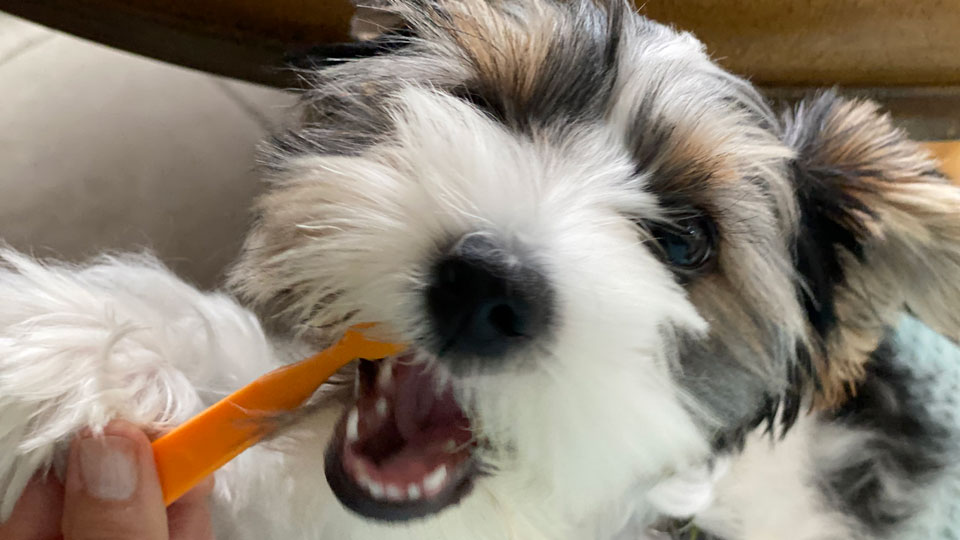
Daily brushing is ideal, but don’t worry if that feels like a big leap at first. Even brushing a few times a week can make a meaningful difference for your puppy’s dental health. The key is consistency, not perfection.
Think of brushing like any new habit: start small and build from there. Some owners find that brushing after breakfast or before bed works best. Others pair it with another routine, like evening walks, to make it easier to remember.
If your puppy resists, try shorter sessions more often. Over time, their comfort (and your confidence) will grow. The goal is to keep plaque and bacteria from building up, and regular brushing, even in small doses, does exactly that.
What toothpaste and toothbrushes are safe for puppies?
When it comes to brushing your puppy’s teeth, using the right tools makes all the difference. Always use a toothpaste made specifically for dogs. Human toothpaste often contains ingredients that are toxic to pets, like xylitol. Dog-safe toothpaste often comes in flavors like poultry or beef, which helps puppies see brushing time as a treat instead of a chore.
For brushes, soft bristles are best. A small, soft-bristled toothbrush or silicone finger brush can help you reach those tiny teeth gently. Some owners prefer finger brushes for more control, especially with wiggly puppies.
If you’re shopping for products, look for those with the VOHC (Veterinary Oral Health Council) seal. It’s a reliable indicator that a product has been tested for safety and effectiveness.
Are chew toys and dental treats good for a puppy’s teeth?
Absolutely — the right chew toys and dental treats can play a big role in keeping your puppy’s mouth clean and healthy. Chewing helps massage the gums, ease teething discomfort, and naturally reduce plaque buildup.
When choosing chew toys, look for puppy-specific options that have a little “give” when you press your thumb into them. Hard items like bones, antlers, or hooves can actually chip or break your pup’s teeth, so it’s best to avoid those. Rubber or nylon toys made for teething puppies are a safer choice. Always supervise your puppy during chew time to prevent accidental swallowing or choking, and remove any toys that are damaged or have pieces chewed off.
Dental treats can also help, especially those with the VOHC seal, which indicates they’ve been proven to reduce plaque or tartar. But remember, chews and treats are a helpful supplement, not a substitute for brushing. Even the best dental treat can’t clean every surface of your puppy’s teeth the way a toothbrush can.
How can I help my puppy with teething pain?
Teething can be uncomfortable for puppies, but there are plenty of ways to help ease their sore gums. Most puppies start teething around 3–4 months old, and during this time, you might notice more chewing, drooling, or even a little blood on toys — all normal signs.
To soothe your puppy’s mouth:
- Offer safe teething toys: Look for soft rubber toys made for puppies or ones with multiple textures to massage sore gums.
- Try frozen relief: A clean, damp washcloth or a vet-approved frozen treat (like a chilled carrot) can provide cool comfort and reduce inflammation.
- Avoid teething gels unless prescribed: Many over-the-counter gels aren’t safe for dogs and can contain ingredients that are harmful if swallowed.
- Keep up with gentle brushing: Even if your puppy’s gums are sensitive, continue light, positive brushing sessions to build the habit.
If your puppy is in visible pain, refuses food, or drools excessively, it’s best to call your vet. Persistent discomfort could signal a retained baby tooth or infection that needs attention.
What does a healthy puppy mouth look like?
A healthy mouth sets the stage for a lifetime of good dental habits. Your puppy’s gums should be pink and smooth, not bright red, swollen, or pale. Their baby teeth will start out small and sharp and should fall out naturally as adult teeth come in (usually by 6 months of age).
Here’s what to keep an eye on:
- Normal gums: Smooth, bubblegum-pink color without any bleeding or dark spots
- Teeth alignment: Adult teeth should replace baby teeth one by one. If you notice double rows (retained baby teeth), call your vet.
- Breath: Mild “puppy breath” is normal, but strong or foul odors may point to plaque buildup or infection.
- Chewing behavior: A healthy puppy will still enjoy toys and food. Reluctance to chew could mean sore gums or a broken tooth.
Regular at-home checks, paired with your puppy’s routine vet visits, help catch issues early and ensure their mouth develops as it should.
Do puppies need professional dental care?

Yes — even young puppies benefit from veterinary dental checkups. At every wellness exam, your veterinarian will take a close look at your puppy’s teeth, gums, and bite alignment. This is the best time to discuss your brushing progress, ask about chew toys, and spot any early issues like retained baby teeth or gum inflammation.
The American Veterinary Medical Association (AVMA) recommends annual dental exams for all dogs. While your puppy may not need a professional cleaning right away, early dental visits help your vet track how adult teeth are coming in and make sure nothing is crowding or shifting. The American Animal Hospital Association (AAHA) also recommends annual dental cleaning starting at age 1 for small dogs and age 2 for large dogs.
As an adult, your dog may need a professional cleaning under anesthesia, which is the only safe way to fully clean below the gumline and remove hardened tartar. Anesthesia is necessary because it keeps your puppy still and pain-free, allowing the veterinarian to thoroughly clean every tooth and check for hidden issues without causing stress or injury. These cleanings are performed with advanced monitoring and care to ensure your pet’s comfort and safety. Learn more about professional dental care
Common puppy dental problems to watch for
- Bad breath (beyond normal “puppy breath”): A strong or foul odor can signal oral issues.
- Bleeding or red gums: Persistent redness or bleeding when chewing or during brushing is a warning sign.
- Retained baby teeth (two rows of teeth): Baby teeth that don’t fall out on schedule can affect adult tooth alignment.
- Tartar or plaque buildup: Yellow or brown deposits along the gumline; early buildup is easier to manage than advanced tartar.
- Reluctance to eat or chew: This may indicate discomfort, pain, or dental injury.
- Broken baby teeth: Often caused by chewing very hard objects, broken teeth can be painful and/or lead to infection.
Keep up on your puppy’s dental care with an Optimum Wellness Plan. From brushing to teething — get advice from a veterinary professional 24/7 with Pet Chat™ (available in most states). You and your puppy also enjoy unlimited office visits, which means your pup can get the care they need to catch dental issues early and build lifelong healthy habits. Explore puppy plans
Puppy dental myths and facts
Myth: Bones are the best way to clean a dog's teeth.
Fact: Many bones are too hard and can fracture teeth or cause oral injuries. Safe, vet-approved chew toys provide gentle abrasion to help reduce plaque while keeping your puppy safe.
Myth: All “puppy breath” is normal.
Fact: While puppies have a characteristic mild odor, a strong, persistent, or foul smell can indicate dental disease, infection, or retained baby teeth that need veterinary attention.
Myth: Dental chews are all a puppy needs.
Fact: Dental chews can help reduce plaque buildup but do not replace regular brushing. Combining chew toys, proper brushing, and routine veterinary exams gives the best protection for your puppy’s teeth.
Myth: Baby teeth don’t need attention.
Fact: Even though they fall out, baby teeth can cause pain, crowding, or infection if problems arise. Checking your puppy’s mouth regularly and brushing early establish good habits and allows your vet to monitor development.
Myth: Brushing once in a while is enough.
Fact: Consistency is key. Even brushing a few times per week is helpful, but daily brushing is ideal for preventing plaque, tartar, and long-term dental issues.
Important Notice: The information provided on this page is for informational purposes only and is not a substitute for professional veterinary advice. Always consult a veterinarian with any questions regarding your pet's health or medical condition. Never disregard or delay seeking professional veterinary advice based on information from this page.
FAQs about puppy dental care
Why does dog toothpaste come in poultry or meat flavors?
Dog-safe toothpaste is flavored to make brushing feel like a treat, not a chore. Puppies are much more likely to cooperate when their toothpaste tastes like something they enjoy. It keeps brushing a positive experience.
What does the VOHC seal on dog products mean?
The VOHC (Veterinary Oral Health Council) seal means a product has been tested and proven to help control plaque and tartar buildup. It’s your sign that a chew, treat, or toothpaste has real, science-backed dental benefits.
Are dental wipes a good substitute for brushing?
Dental wipes can help remove some plaque, especially in puppies who aren’t ready for a toothbrush yet. They’re a helpful backup, but brushing reaches more surfaces and offers a more complete cleaning experience.
When should I call the vet about my puppy’s teething problems?
If your puppy has persistent bad breath, swollen or bleeding gums, or refuses to eat or chew, contact your vet. They can check for retained baby teeth, infection, or pain — and give you guidance through the teething stage.
Is your puppy’s dental health on track?
Schedule a puppy wellness exam to check teeth, gums, and jaw development.


Early Care
Designed for growing puppies.
Help protect your puppy from harmful diseases and support their health as they grow.
See what's included
Early Care Plus
Designed for growing puppies – includes a spay or neuter surgery.
All the services in Early Care, plus an additional discount and a spay or neuter procedure.
See what's included


doggie dilemma? cat conundrum?!


 Pet Chat™


 Appointment details


 Pittsburgh Village East
 847-816-4667


 Notes for the vet

 This is a note for users pertaining to specific appointment types, requests, requirements, or other items.